By The Julia Wesselkamper Group
Whether you work from home full-time or just need a dedicated spot for handling emails, bills, and late-night project sprints, the home office has become one of the most important rooms in any house. It is no longer a luxury reserved for corner suites with mahogany desks; it is a practical necessity that also happens to be a major selling point in today's real estate market. The challenge is designing a space that serves your productivity without sacrificing the aesthetic standards you hold for the rest of your home.
The good news is that functional and stylish are not mutually exclusive. With thoughtful planning, the right furniture, and a few key design principles, you can create a workspace that keeps you focused, organized, and genuinely comfortable. Whether you are converting a spare bedroom into an office, carving out a nook in your living space, or working with a purpose-built room, the fundamentals are the same.
This guide walks you through everything you need to design a home office that looks intentional, supports the way you actually work, and holds its value as a feature in your home for years to come.
Key Takeaways
- Proper lighting, ergonomic furniture, and smart storage are the foundation of any high-performing home office.
- Your desk placement and room layout should support focus while keeping the space feeling open and livable.
- Design choices like color, materials, and decor can elevate a workspace without compromising its function.
- Even compact or awkward spaces can be transformed into effective home offices with the right approach.
- A well-designed home office can add meaningful value to your property and appeal to future buyers.
Choosing the Right Space in Your Home
Before you buy a single piece of furniture, you need to assess what you are actually working with. Not every home office has the luxury of a fully dedicated room, and that is fine. What matters more is how you define and optimize the space you do have. A spare bedroom is the most obvious starting point, but underutilized corners, wide hallways, and open loft areas can all become surprisingly capable workspaces with the right setup.
If you have a dedicated room, consider how its dimensions and natural light will interact with your daily routine. A room with east-facing windows will fill with morning light, which is ideal if you complete most of your work earlier in the day. North-facing rooms offer consistent, diffused light throughout the day and tend to be easier to work in without glare on your monitor. South- and west-facing rooms can receive bright and warm in the afternoon, so window treatments become more important.
Beyond light, think about acoustics. If you take video calls regularly, proximity to high-traffic areas of the home matters. A room near a busy kitchen or a main living area will pick up ambient noise in ways that might become distracting. When you are evaluating your options, sound management should be part of the equation from the start.
If you have a dedicated room, consider how its dimensions and natural light will interact with your daily routine. A room with east-facing windows will fill with morning light, which is ideal if you complete most of your work earlier in the day. North-facing rooms offer consistent, diffused light throughout the day and tend to be easier to work in without glare on your monitor. South- and west-facing rooms can receive bright and warm in the afternoon, so window treatments become more important.
Beyond light, think about acoustics. If you take video calls regularly, proximity to high-traffic areas of the home matters. A room near a busy kitchen or a main living area will pick up ambient noise in ways that might become distracting. When you are evaluating your options, sound management should be part of the equation from the start.
Factors To Evaluate Before Committing to a Space
- Natural light direction and intensity throughout the day, especially during your peak working hours.
- Proximity to noise sources like the kitchen, HVAC returns, or exterior-facing walls.
- Access to sufficient electrical outlets and whether the room can support your tech needs without running extension cords everywhere.
- Ventilation and temperature regulation, since a space that gets too warm in summer will affect your comfort and concentration.
- Whether a door or a visual partition can create separation between work and living areas, which matters more than most people anticipate.
Ergonomics and Furniture Selection
The furniture you choose will define how you feel at the end of every workday. Ergonomics is not a trend or a corporate buzzword; it is the science of designing your environment around your physical needs so that prolonged sitting and screen time do not result in chronic discomfort. For a home office to truly function well, it all needs to start here.
Your desk height should allow your elbows to rest at approximately 90 degrees when your hands are on the keyboard, and your monitor should sit at eye level to keep your neck neutral. A standing desk or a height-adjustable model gives you the option to vary your position throughout the day, which has measurable benefits for both energy and posture. Many people find that alternating between sitting and standing in two-hour blocks makes a significant difference over time.
Your chair deserves as much investment as your desk. Look for lumbar support that follows the natural curve of your lower back, adjustable armrests, and a seat depth that lets you sit with your back against the backrest without your knees pressing into the edge. A great chair does not have to look clinical; there are many ergonomic designs that read as sophisticated and intentional in a home setting.
Your desk height should allow your elbows to rest at approximately 90 degrees when your hands are on the keyboard, and your monitor should sit at eye level to keep your neck neutral. A standing desk or a height-adjustable model gives you the option to vary your position throughout the day, which has measurable benefits for both energy and posture. Many people find that alternating between sitting and standing in two-hour blocks makes a significant difference over time.
Your chair deserves as much investment as your desk. Look for lumbar support that follows the natural curve of your lower back, adjustable armrests, and a seat depth that lets you sit with your back against the backrest without your knees pressing into the edge. A great chair does not have to look clinical; there are many ergonomic designs that read as sophisticated and intentional in a home setting.
What To Look For in Home Office Furniture
- Adjustable desk height, either manually or electronically, to support both sitting and standing positions.
- A chair with lumbar support, adjustable seat height, and armrests that let your shoulders relax naturally.
- A monitor arm or stand that positions your screen at eye level without consuming desk surface area.
- Storage solutions that keep frequently used items within arm's reach while keeping the desktop clear.
- Cable management to prevent visual clutter from undermining an otherwise clean aesthetic.
Lighting Your Home Office Properly
Lighting is one of the most underestimated elements of home office design. Most people rely on a single overhead fixture and then wonder why they feel fatigued by early afternoon or why their video calls look washed out. A well-lit workspace requires at least two to three light sources working together, each serving a different purpose.
Ambient lighting provides the overall illumination for the room and should be bright enough to prevent eye strain without creating harsh contrasts. Natural light is your best ambient source; supplement it with overhead lighting on dimmer switches so you can adjust as the day changes. Task lighting is more focused and sits closer to your work surface; a desk lamp with adjustable color temperature enables you to shift between warm light for reading and cooler, brighter light for detailed work. Accent lighting adds depth and warmth to the room, making it feel more like a thoughtful interior space and less like a utility room.
If you appear on video calls frequently, the direction of your light source matters considerably. Front lighting, meaning light positioned in front of you rather than behind, will illuminate your face clearly and make you look alert and engaged on screen. Avoid sitting with a window directly behind you unless you have a way to control the exposure, since backlit setups make faces appear shadowed and difficult to read.
Ambient lighting provides the overall illumination for the room and should be bright enough to prevent eye strain without creating harsh contrasts. Natural light is your best ambient source; supplement it with overhead lighting on dimmer switches so you can adjust as the day changes. Task lighting is more focused and sits closer to your work surface; a desk lamp with adjustable color temperature enables you to shift between warm light for reading and cooler, brighter light for detailed work. Accent lighting adds depth and warmth to the room, making it feel more like a thoughtful interior space and less like a utility room.
If you appear on video calls frequently, the direction of your light source matters considerably. Front lighting, meaning light positioned in front of you rather than behind, will illuminate your face clearly and make you look alert and engaged on screen. Avoid sitting with a window directly behind you unless you have a way to control the exposure, since backlit setups make faces appear shadowed and difficult to read.
Home Office Lighting Sources To Layer
- A dimmer-controlled overhead fixture that covers the room evenly without creating harsh shadows.
- A dedicated task lamp positioned to the side of your dominant hand to minimize glare on your work surface.
- A ring light or softbox positioned slightly above eye level in front of you for video calls, if that is a regular part of your work.
- Warm-toned accent lighting on shelves, behind monitors, or in corners to add visual depth.
Design, Color, and Aesthetic Cohesion
Functionality earns its value when the space also feels great to be in. A home office that looks well-designed reduces the psychological resistance to sitting down and getting started. The goal is to make choices that feel deliberate rather than improvised.
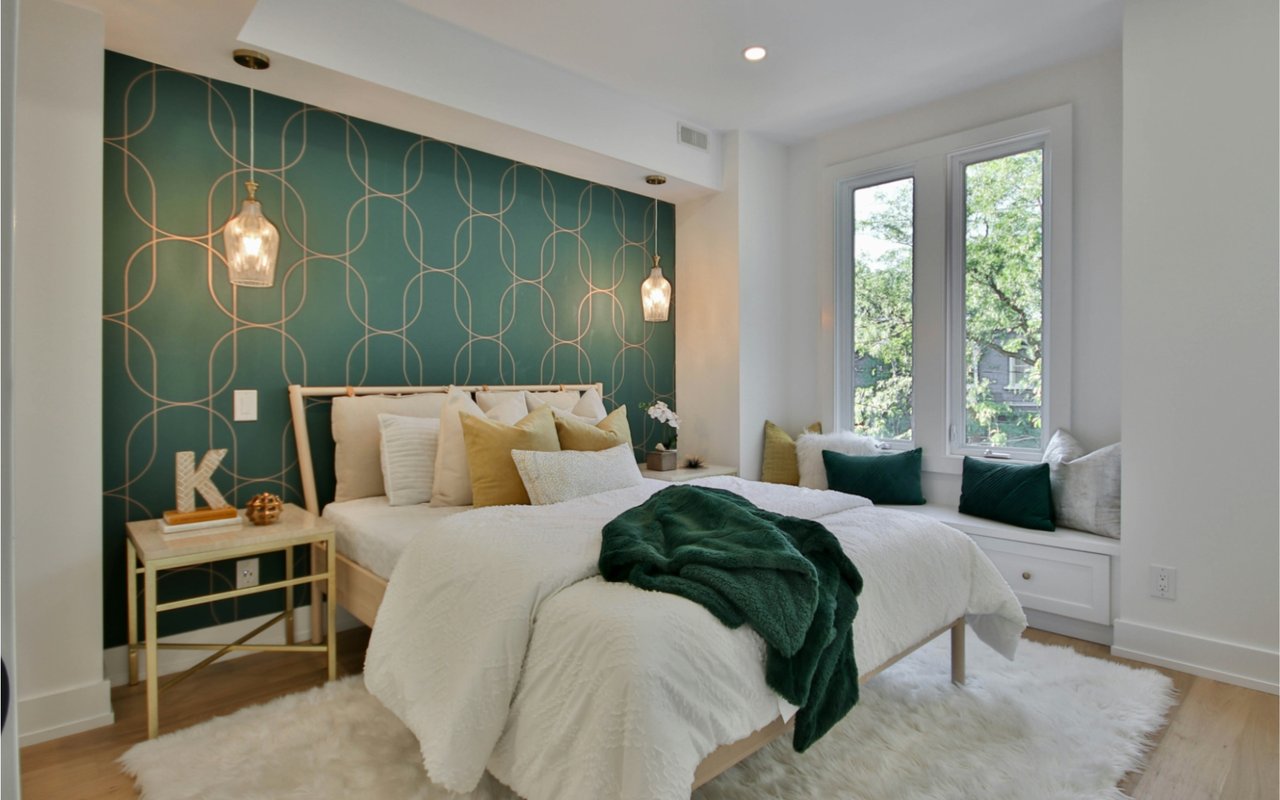
Color plays a critical role in how a space feels. Cool tones like soft blues, warm grays, and muted greens tend to promote calm and focus. Deep, saturated colors like forest green, navy, or charcoal can feel grounding and sophisticated in a smaller space without making it feel cramped, especially when balanced with lighter furniture and adequate lighting. Warm whites and creams work well as backdrop colors in rooms with limited natural light, keeping things feeling open without being stark.
Materials should feel cohesive across major surfaces. If your desk is wood, consider carrying that material into shelving, picture frames, or small accessory trays. If your chair has a leather or faux-leather finish, a leather desk mat or a leather-bound notebook stand adds consistency without being heavy-handed. The goal is a room that looks considered, not curated to the point of feeling staged.
Color plays a critical role in how a space feels. Cool tones like soft blues, warm grays, and muted greens tend to promote calm and focus. Deep, saturated colors like forest green, navy, or charcoal can feel grounding and sophisticated in a smaller space without making it feel cramped, especially when balanced with lighter furniture and adequate lighting. Warm whites and creams work well as backdrop colors in rooms with limited natural light, keeping things feeling open without being stark.
Materials should feel cohesive across major surfaces. If your desk is wood, consider carrying that material into shelving, picture frames, or small accessory trays. If your chair has a leather or faux-leather finish, a leather desk mat or a leather-bound notebook stand adds consistency without being heavy-handed. The goal is a room that looks considered, not curated to the point of feeling staged.
Design Principles That Elevate the Space
- Choose a consistent material palette of two to three finishes and repeat them across multiple surfaces for visual coherence.
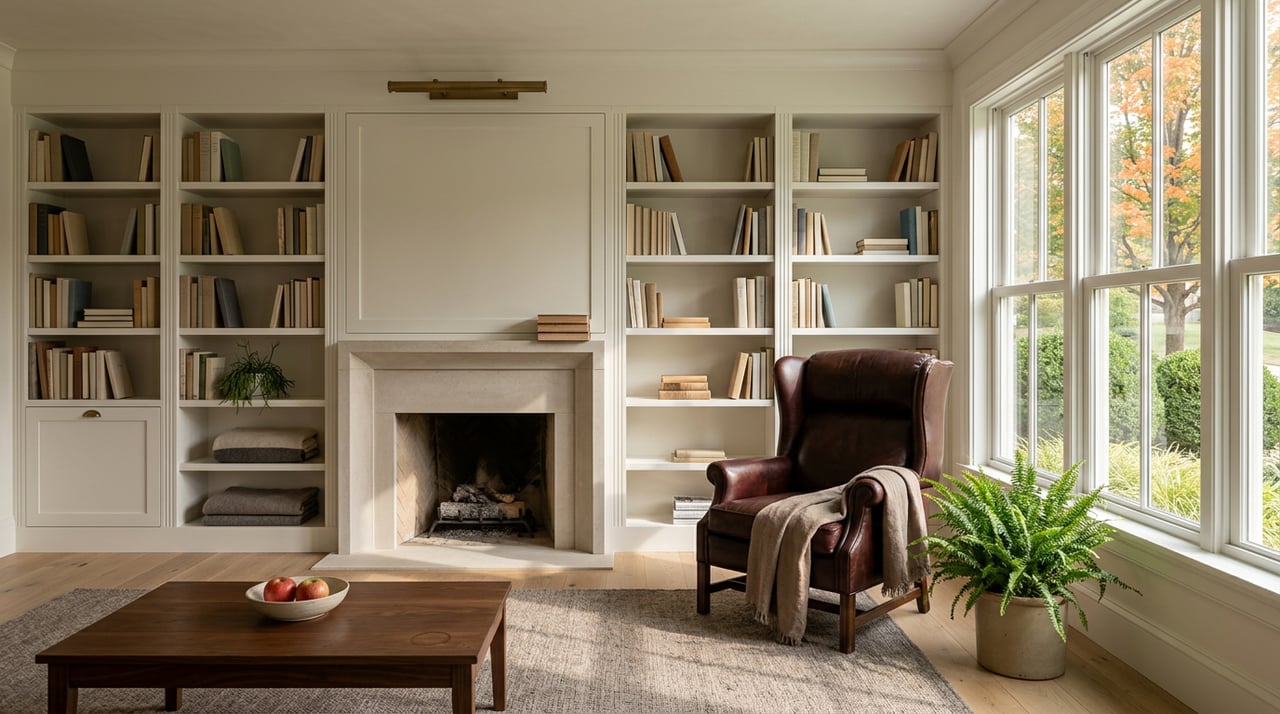
- Use open shelving intentionally; books, plants, and a few meaningful objects are enough without tipping into clutter.
- Incorporate wall art or a framed print to ground the room and give it a personal quality.
- Keep the floor clear whenever possible; a simple area rug can define the workspace and add warmth without adding visual noise.
- Invest in one quality piece, whether a distinctive desk lamp, an interesting chair, or a well-proportioned desk, that anchors the room's personality.
FAQs
How Spacious Does a Home Office Need To Be?
There is no minimum square footage required for an effective home office. Many people work productively in spaces that are compact, particularly if the layout is efficient and storage is built in or built up. What matters more than space is how the room is organized; a small room with proper lighting, smart storage, and a comfortable desk setup will outperform a spacious room where things are cluttered and the layout is not optimized for focus.
What Is the Best Color for a Home Office?
The best color depends on how you work and how much natural light the room receives. Soft blues, muted greens, and warm grays are widely regarded as productive and calming. If your room receives limited natural light, leaning toward lighter tones will keep the space feeling open. If you want a more dramatic or design-forward look, deeper saturated tones like navy or forest green work well when balanced with lighter furniture and layered lighting.
Build the Office That Matches How You Work
The most effective home office is designed around your habits, your work style, and the aesthetic standards you hold for the rest of your home. It does not require a complete renovation or a significant budget; rather, it requires thoughtful decisions about layout, light, furniture, and the details that make a space feel finished rather than functional by accident.
If you are considering a home with dedicated office space or looking to buy a property with the right bones to set one up, we can help you find options that match your vision. Whether you are searching for a home with the perfect built-in office or ready to sell and move on to a space that better fits your lifestyle, we are here to help. At The Julia Wesselkamper Group, we serve buyers and sellers across the greater tri-state area, including Cincinnati and Northern Kentucky, with a global network for international clients. Reach out today, and let's find the space where you do your best work.
If you are considering a home with dedicated office space or looking to buy a property with the right bones to set one up, we can help you find options that match your vision. Whether you are searching for a home with the perfect built-in office or ready to sell and move on to a space that better fits your lifestyle, we are here to help. At The Julia Wesselkamper Group, we serve buyers and sellers across the greater tri-state area, including Cincinnati and Northern Kentucky, with a global network for international clients. Reach out today, and let's find the space where you do your best work.