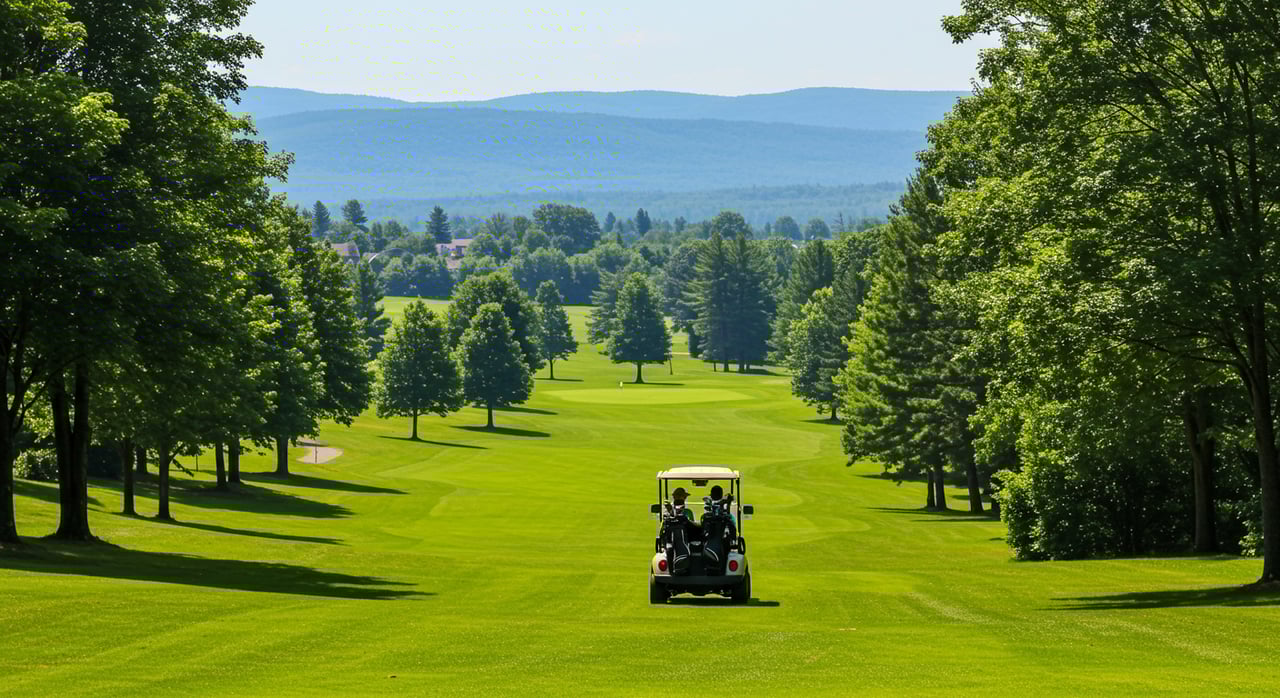
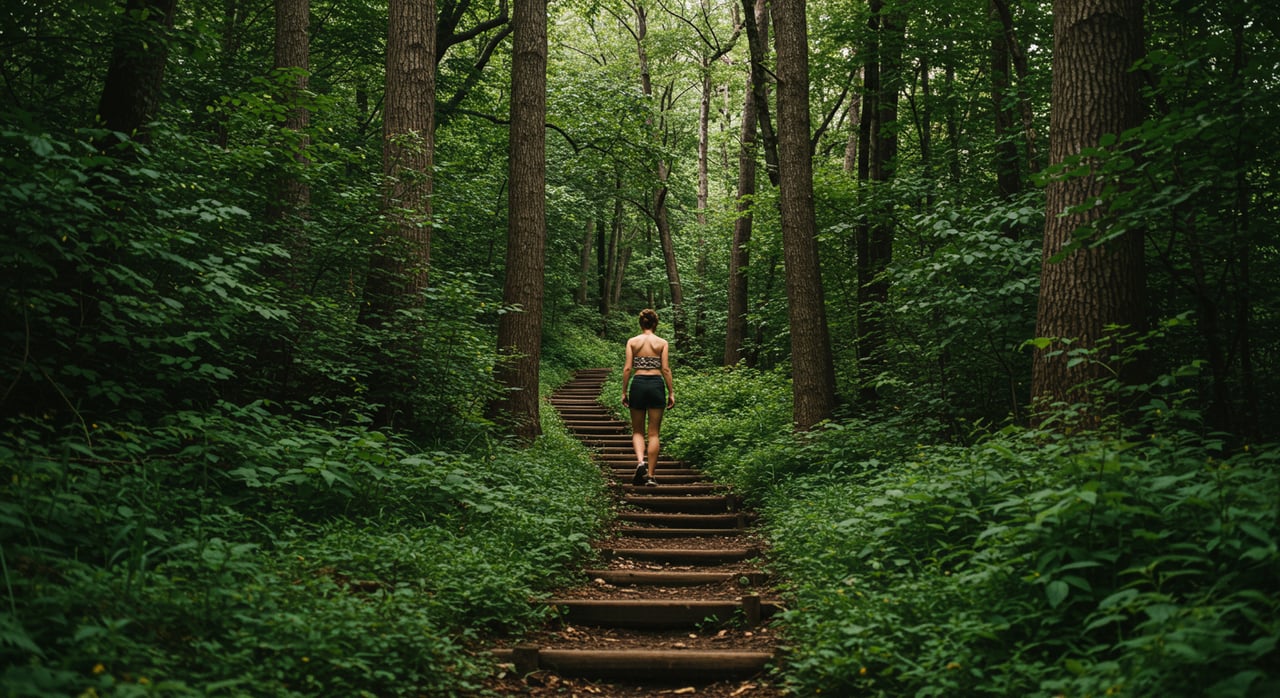
Walk five minutes into the woods behind most Indian Hill properties and you will cross a bridle trail. It might run along the property line. It might cut straight through the back third of the lot. Either way, the person riding a horse along that trail almost certainly paid the village for the privilege, and if you tried to ride alongside them without doing the same, you would be violating a local ordinance that has stood since the 1920s.
Then, on the first Saturday of October, all of that changes. For one day, anyone can drive up to Clippinger Field, hand over ten dollars for the carload, and stand at the rail while the same trail system that requires an annual license to touch becomes the site of the biggest public gathering the village hosts all year. That contrast, a closed, paid, ordinance-protected trail network that opens itself once a year to strangers with lawn chairs, is the part of Indian Hill's daily rhythm that rarely gets explained in full.
A Trail System You Cannot Just Wander Onto
The Village of Indian Hill Public Works Department maintains 75 miles of bridle trails running through wooded green areas, protected easements, and private land across the community. Riding on them requires a bridle trail license, issued only through the Village Administration office at 6525 Drake Road, and new members have to appear in person. Applications cannot be processed by mail.
The license year runs from June 1 to May 31, with half-year memberships available starting December 1 at half the standard rate. Here is what the pricing actually looks like:
| Access Type | Cost |
|---|---|
| Annual license, first two riders in a household | $200 total |
| Each additional family member | $25 |
| Guest pass, Village resident's guest | $15 per day |
| Guest pass, non-resident guest | $25 per day |
That guest pass system has a ceiling built into it. If the same guest rides more than six times in one year on day passes, the village asks them to purchase a full annual membership instead. The trails are not a casual pass-through amenity. They are licensed infrastructure, and the village treats them that way even when they run across a resident's own backyard.
Six Named Sections, One Village Crew
The 75 miles are not one continuous loop. They are broken into six distinct sections, each with its own name and its own geography, and residents who ride regularly tend to think in terms of these sections rather than the system as a whole:
- Lower "L" Trails, south of Shawnee Run
- Clippinger "C" Trails, surrounding Clippinger Field near the northeast end of Shawnee Run
- Middle-West "M" Trails, behind Camargo Stables, running north to Kugler Mill Road and Given Road up toward Sutphin Field
- Middle-East "M" Trails, east of Given Road near Buckingham Road, passing Whitegate Lane and Kroger Farm
- Upper "U" Trails, north of Camargo Road through the Little Red Schoolhouse area up to Livingston Park
- Greenacres Trails, west of Loveland-Madeira Road, between Remington Road and Keller Road
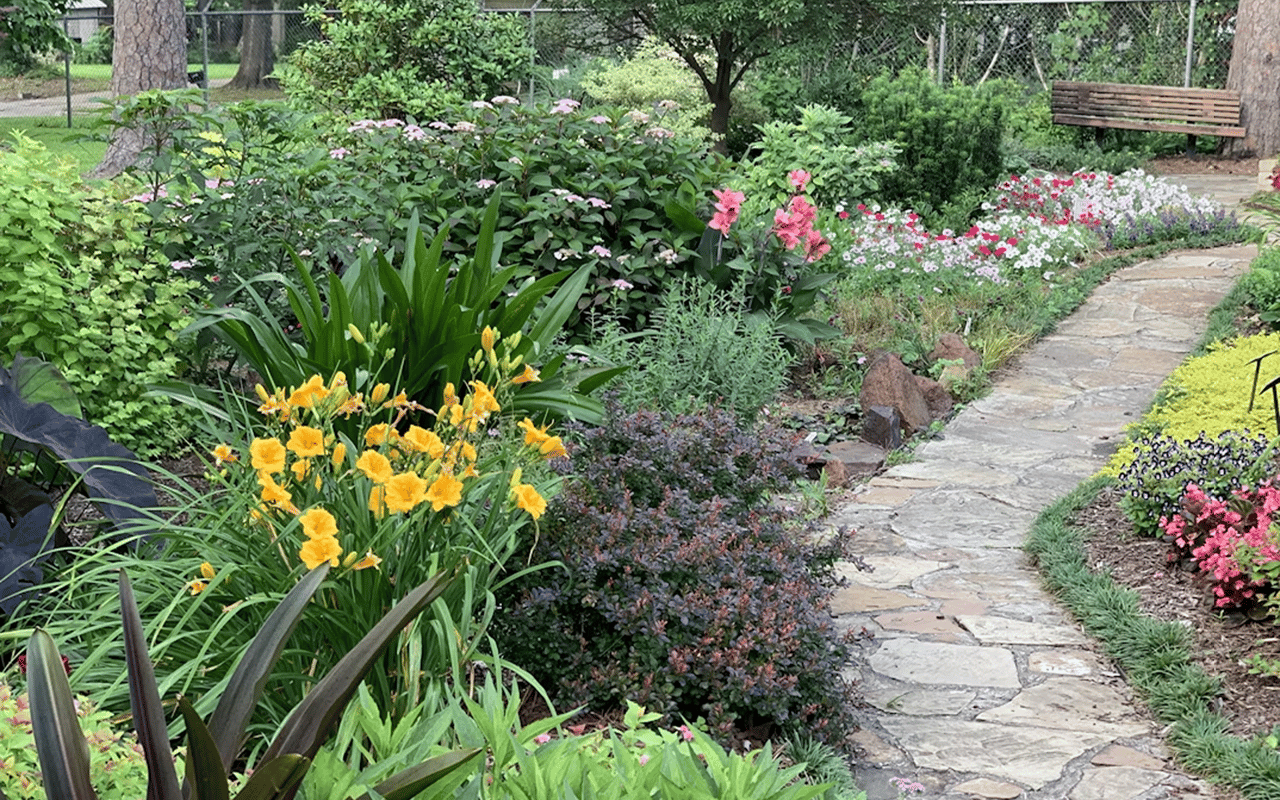
Public Works handles the baseline seasonal work: mowing, weed-eating, tree trimming, and culvert or drainage repairs as they come up. The trail etiquette that governs actual use on the ground is simpler than the map suggests. Riders are asked to stay on the designated route, and where a route is not obvious the guidance is to ride along the tree line rather than guess.
Who Actually Keeps 75 Miles Passable
A trail system this size does not stay clear on Public Works alone. The Indian Hill Equestrian Club, an all-volunteer nonprofit founded in 2012 by Pam Middendorff, has grown to more than 100 members and runs organized volunteer trail-maintenance events from March through October. Members show up for whatever level of work they are comfortable with, from brush trimming and small debris removal up to chainsaw work clearing fallen trees. The club also runs monthly group trail rides open to all skill levels, plus a handful of social gatherings each year, and it works directly with the village on maintenance priorities.
A newer organization has joined that effort. The Trees & Trails Foundation, led by Middendorff alongside Vice President Eppa Rixey IV, formed specifically to address a problem that comes with a century of use: invasive plants and visible wear on trails that have carried riders since the 1920s. The foundation produced a documentary, "Legacy of Green: The Trees & Trails of Indian Hill," aimed at explaining that history to residents who may never have thought about who keeps the woods behind their property rideable. On the planning side, the equestrian club brought in Penn Trails LLC in 2017 to complete a formal trail assessment and master plan, a two-phase process built to guide maintenance decisions for a system that had, by then, absorbed nearly a century of wear without a comprehensive plan behind it.
Where the Ordinance Comes From
The "Horses and Hounds only" designation on these trails is not a modern add-on. It traces back to the Camargo Hunt, whose members in the mid-1920s acquired and donated land that became the village's Green Areas, clearing additional trails for riding at the same time. At its peak, the Hunt's members gathered and rode across established hunt country covering an estimated 50 square miles, moving between properties and connecting farms long before Indian Hill incorporated as a village in 1941. The ordinance that protects trail use today is a direct descendant of that donated land and that riding tradition, which is part of why it still carries real legal weight rather than functioning as an informal neighborhood custom.
The One Weekend the Gates Open
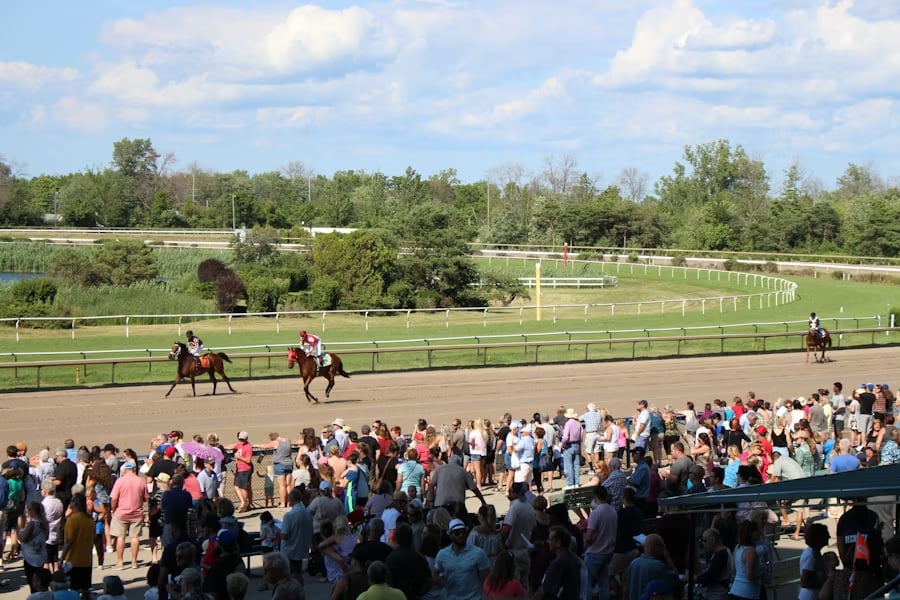
Every October, that closed system produces the village's most public event. The Camargo Hunter Trials will hold its 85th annual running on Saturday, October 3, 2026, at Clippinger Field on Shawnee Ridge Lane, with gates opening at 7:30 a.m. It is one of the oldest competitions of its kind in North America, built around testing a hunt horse's stamina and a rider's composure over hunt-field terrain rather than a standard show ring. Riders and horses navigate cross-country courses set with natural obstacles: stone walls, post-and-rail fences, fallen logs, the same kind of terrain the Camargo Hunt has ridden for decades. A separate small ring gives younger and newer riders a more approachable version of the same competition.
The day's centerpiece is the Parade of Hounds, when the Huntsman, in traditional formal coat, enters the ring with the pack and commands them by horn while Hunt members follow in a ceremonial lap. This year's Hunter Derby carries $1,200 in prize money. Off the field, a tailgate competition runs alongside the riding, judged this year by Sommelier Kevin Hart of Hart & Cru, private chef Ben Younts, and Joe Suhre, a two-time Grand Champion of the tailgate competition himself. Entrants serve up to two bites or sips to the judges, home-cooked or catered by a private chef, no store-bought substitutions allowed.
Admission for the entire day runs ten dollars per carload. That is the number worth sitting with. The same trails that require a $200 annual license, a six-visit cap on guest passes, and an in-person application at the Village Administration office produce, once a year, a gathering that costs less than parking downtown and asks nothing of the people who show up except that they bring a chair.
What This Actually Tells You About Life Here
Most of the year, Indian Hill's bridle trails function as private infrastructure that happens to be publicly regulated: licensed, mapped into named sections, maintained by a mix of village crews and volunteer riders, and legally off-limits to casual foot traffic. That is unusual for a suburb this close to a major city, and it is easy to live near the trails for years without fully registering how deliberately they are managed. The Hunter Trials is the one day that structure becomes visible to everyone, not just license holders, which is part of why residents who have never ridden a horse in their life still treat the first Saturday in October as a fixture on the calendar.
If you already live here, the trails are worth understanding on their own terms, not just as scenery behind the tree line. Get a license, join a club ride, or just show up to Clippinger Field on October 3 with a lawn chair and ten dollars.
If you are still learning what makes different Cincinnati neighborhoods distinct, this is the kind of detail that separates Indian Hill from a suburb with similar home sizes but none of this infrastructure or history behind it. The Julia Wesselkamper Group works with buyers and sellers across Indian Hill and the surrounding communities, and we are always glad to talk through what daily life actually looks like in the neighborhoods on your list. Contact us anytime.