Walk into Al'Lupo Ristorante on Celestial Street tonight and you'll eat handmade bucatini under the same soaring ceilings where Rookwood Pottery once fired its tile. The building sat dark for years after the last occupant closed. Now chef Roberto Peloni serves carbonara where kilns used to run, and the restaurant's own description leans into it directly: "the spirit of Rookwood lives on."
That's not a one-off. It's the pattern. If you've lived on the hill for more than a season, you've probably noticed that Mount Adams doesn't grow the way other Cincinnati neighborhoods grow. There's no vacant lot to build a new restaurant row on, no strip of undeveloped ridge waiting for construction crews. What Mount Adams has instead is a fixed set of buildings, most of them a century or more old, and a neighborhood that keeps finding new life by refilling the ones that went dark. Three restaurant openings and a brand-new arts festival this year all trace back to that same mechanic, and once you see it, you start reading every "coming soon" sign on the hill differently.
The Building That Explains Everything
Al'Lupo opened in the former Rookwood Pottery Food & Beverage Co. space at 1077 Celestial Street, a 5,000-square-foot room that carries more neighborhood history than almost any other address in Mount Adams. Peloni signed a ten-year lease and put roughly $400,000 into the buildout, according to reporting from the Cincinnati Business Courier, before running a soft-opening schedule through the holidays and formally announcing the restaurant in early January 2026. The space had been shuttered long enough that its reopening was itself the news story before a single plate went out.
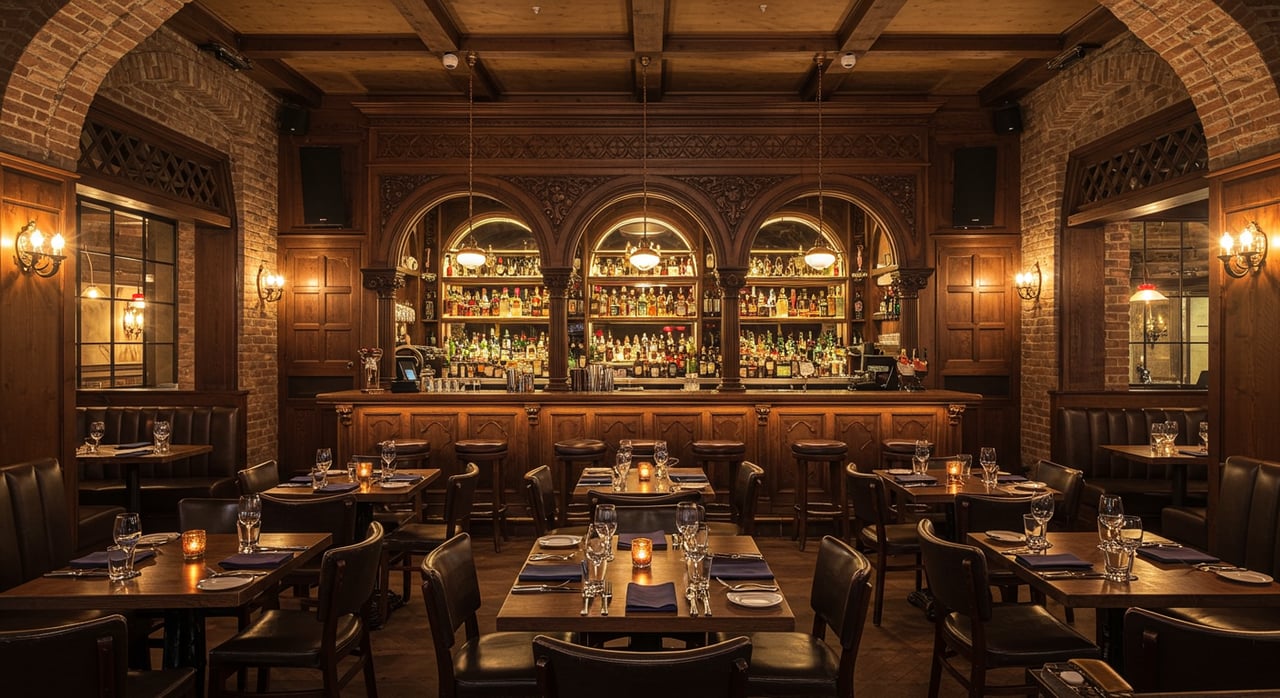
What makes it worth your attention as a resident isn't the menu, though the bread and the tiramisu have their fans. It's that the new owners chose to keep the architectural bones of the old pottery building rather than gut them. High ceilings, exposed brickwork, the bar built into what used to be production space. The restaurant's own materials describe it as a continuation of "the manual artistry that has lived within these walls for generations." That's marketing language, but it also happens to be true of the building's actual use history, which is rarer than it sounds.
A Clubhouse Comes Back After Seven Years Dark
A few blocks over, Tavern on the Hill reopened at 1111 St. Gregory Street in June 2026, after sitting closed for seven years. The original version of the bar and restaurant ran for twelve years before shutting down in 2019 for reasons that were never fully explained. This time it's back with a New England-tavern concept, built around the idea that "every neighborhood deserves a clubhouse," as the ownership team put it in their opening announcement. Expect burgers, wings, all-day brunch, and a room designed to feel lived-in rather than new, with vintage sports memorabilia and clubhouse details standing in for the sleeker look most restaurant openings reach for now.
Seven years is a long time for a storefront on a hill this small to sit empty. It's also, notably, almost exactly the gap Rookwood's space sat vacant before Al'Lupo moved in. Two of the neighborhood's most visible reopenings this year both followed multi-year dark periods in buildings that had already proven themselves as neighborhood gathering spots once before.
The Quiet Third Opening
Luca Bistro is the smaller story, and it's still worth knowing about if you haven't found it yet. Chef Frédéric Maniet runs a classic French bistro on the hill, steak frites and moules marinière, an all-French wine list that turns entirely rosé through the summer, and a tree-shaded back patio that runs a live music series through the season. Cincinnati Magazine named it No. 9 on its Best New Restaurants list, and it's the kind of place that rewards walking in without a reservation on a slow weeknight rather than planning around it.
Luca doesn't carry the same landmark-building backstory as Al'Lupo or Tavern on the Hill. What it shares with them is scale. None of these are large chains taking a bet on foot traffic. They're independent operators making a specific wager on a specific building in a neighborhood where the inventory of available space barely changes year to year.
The Neighborhood That Keeps Trying to Get Its Art Back
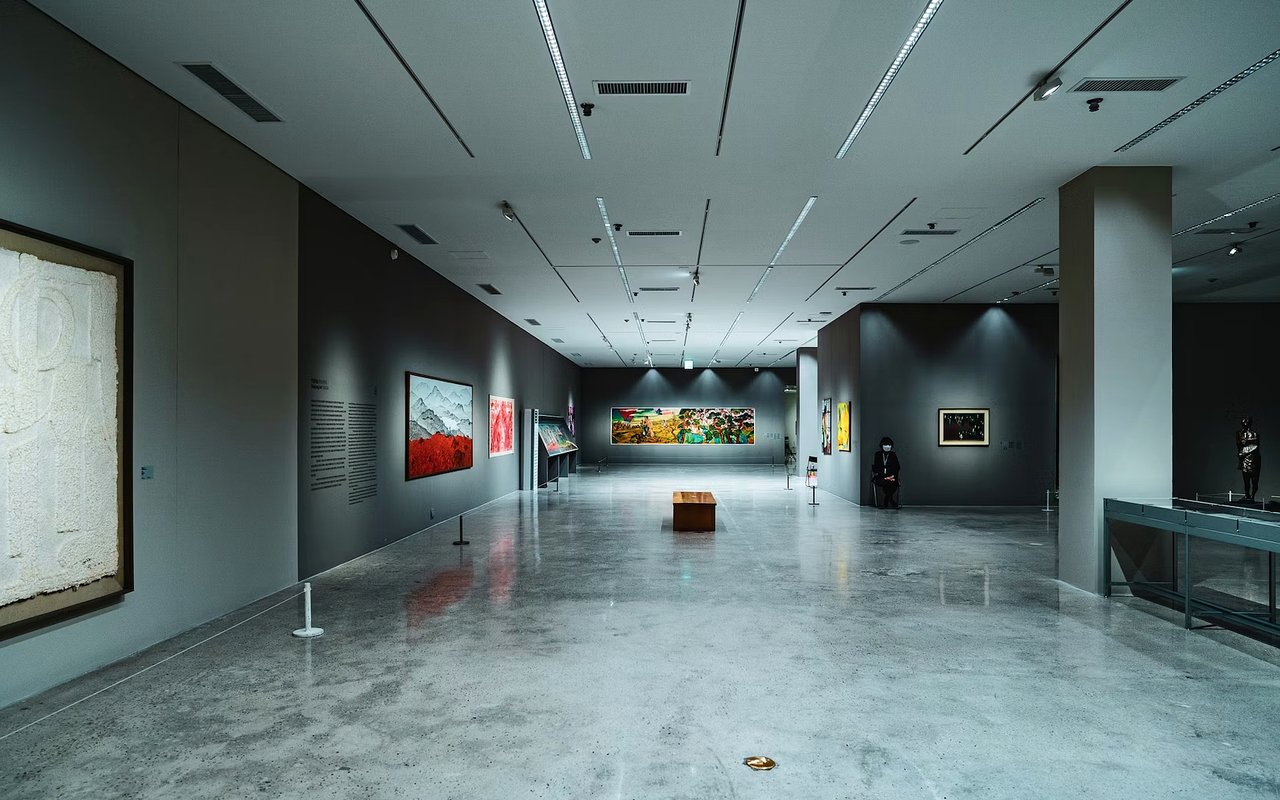
On May 30, 2026, the Mt. Adams Art Festival ran for the first time, presented by Gallery Jenseits and the Mt. Adams Business Guild. The stated goal, in the organizers' own words, was to "reestablish Mt. Adams as one of Cincinnati's historic arts neighborhoods." That phrasing only makes sense if you know the backstory. Summerfair, now the region's premier juried fine art show, actually started in Mount Adams before it outgrew the neighborhood's narrow streets and relocated to Coney Island. The Cincinnati Art Club has called Mount Adams home since 1957, and this year's festival included a plein air exhibition inside the club's own Wessel Gallery. So the identity the new festival is chasing isn't invented. It's a real thread the neighborhood used to hold and, at some point, let slip.
This year's festival set up curated outdoor zones across two parking lots on St. Gregory Street, the terraces of Bow Tie Cafe, and a lot on Pavilion Street, with the Cincinnati Art Club running a plein air painting circuit between the museum and the business district. Organizers have already said they intend for it to become a recurring event, which means next May is worth putting on your calendar now rather than finding out about it after the fact.
"We are excited to highlight artists and help reestablish Mt. Adams as one of Cincinnati's historic arts neighborhoods."
Why This Keeps Happening Here
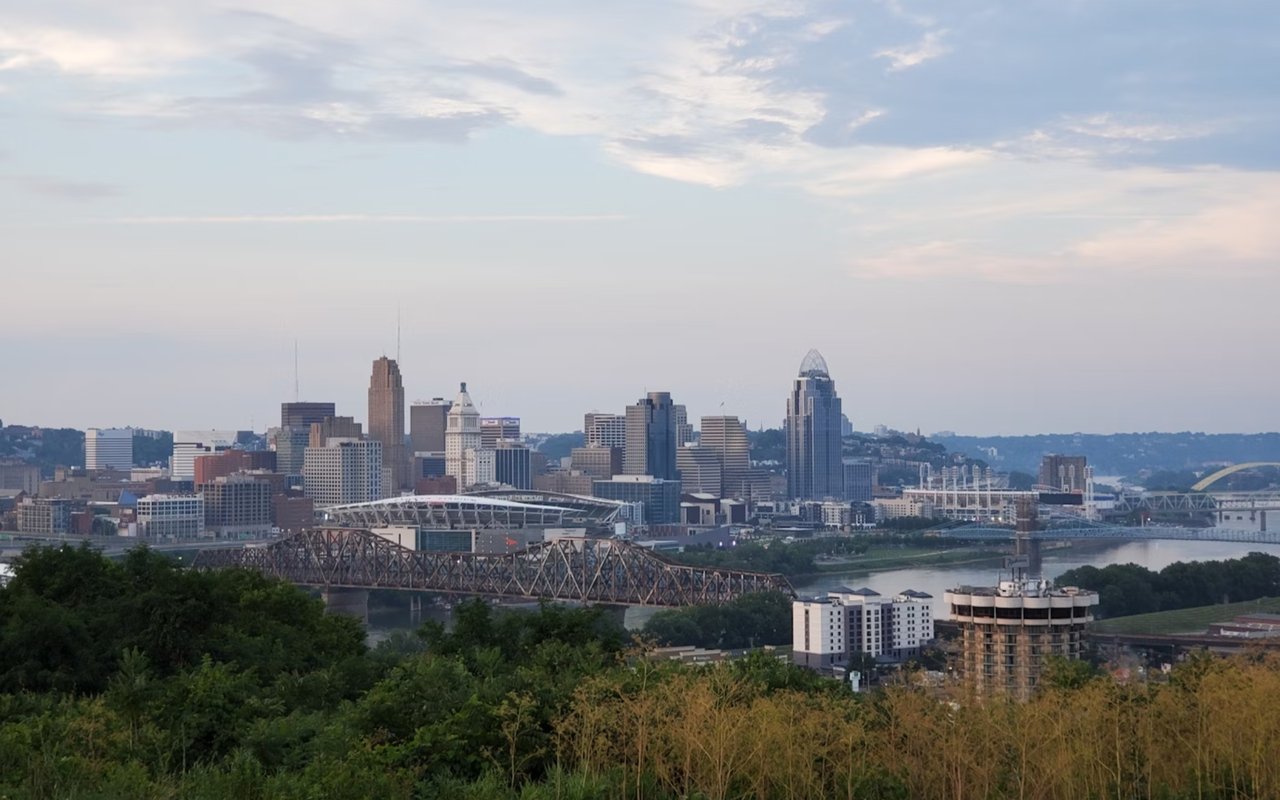
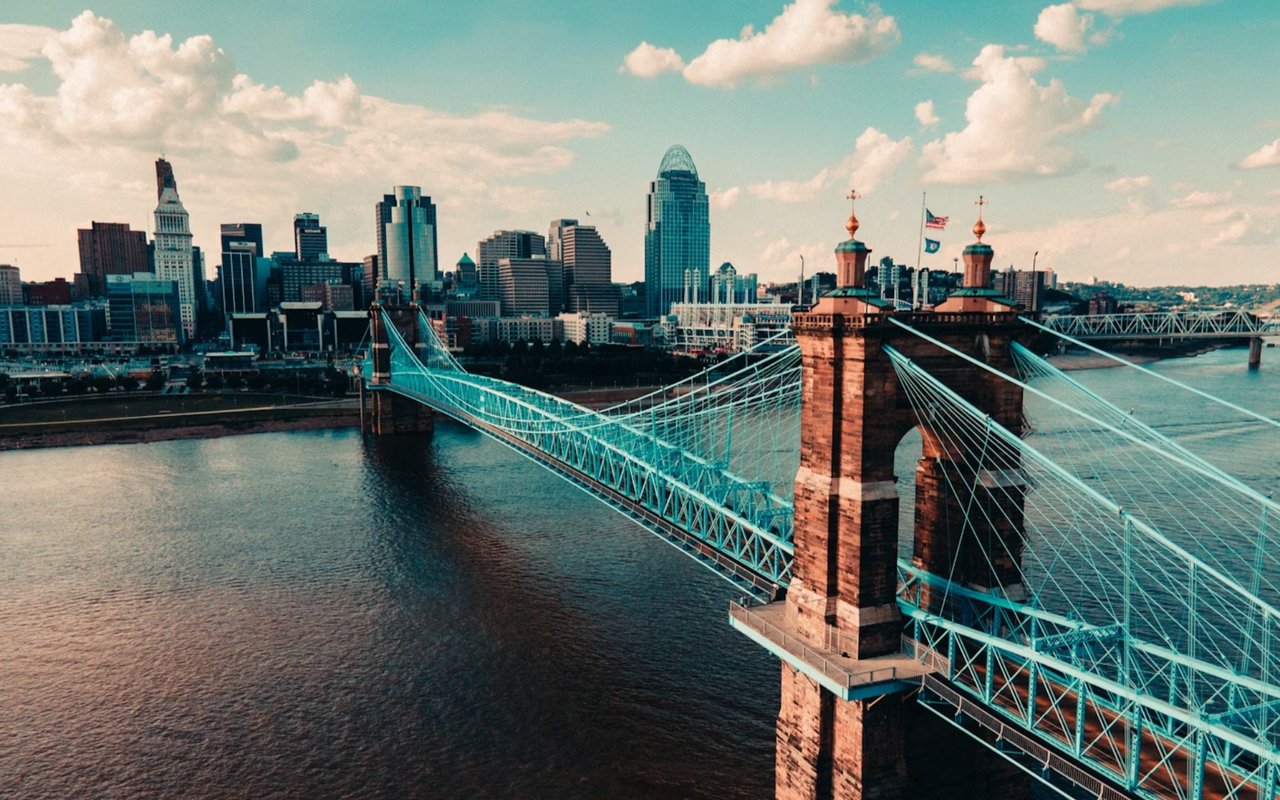
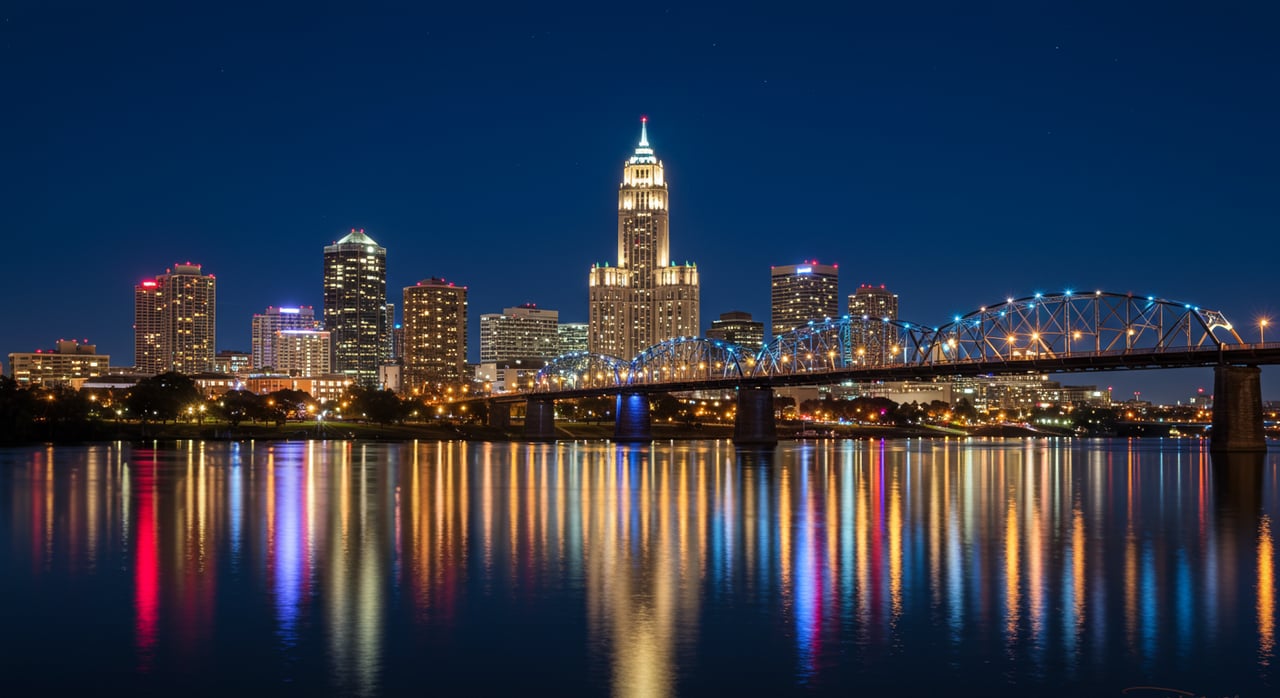
Mount Adams sits on a bluff above the Ohio River with Eden Park on one side and a steep drop to downtown on the other. There's essentially no room to build new commercial space, which means every business decision on the hill is really a decision about which existing building to reoccupy and how faithfully to honor what it used to be. That's a different growth pattern than you'll find in a neighborhood with open land, and it changes what "new" actually means here. A new restaurant in Mount Adams is rarely new construction. It's usually a landmark coming back online after sitting dark, run by someone who understood that the building's history was worth keeping rather than erasing.
If you live here, that's useful context for reading the neighborhood going forward. An empty storefront on the hill doesn't usually stay empty for lack of interest. It stays empty because the right operator, with the right plan for that specific space, hasn't come along yet. When one does, as it did twice this year within blocks of each other, it tends to lean into what the building already was rather than start from a blank slate.
The community calendar reflects the same self-organizing instinct. A short list of what recurs on the hill each year, worth keeping on your radar:
- Mt. Adams Art Festival, late May, organized by Gallery Jenseits and the Mt. Adams Business Guild
- Mt. Adams Pride, held in early June with a parade and community programming through the month
- An annual summer torchlight parade with a jazz band leading the way, berets and French flags encouraged, dogs welcome
- Holiday on the Hill, an annual December luminaria night with a scavenger hunt and a visit with Santa at Monk's Plaza
None of these are new inventions of 2026 except the art festival, and even that one is explicitly trying to restore something the neighborhood used to have rather than manufacture something new. That's the throughline. Mount Adams doesn't expand. It remembers, and then it reopens.
If you're already living on the hill, none of this changes anything about your address. It just means the next time you see scaffolding on a building you thought was empty for good, it's worth paying attention to what goes back in. That building has probably been something worth knowing about before, and whoever's reopening it likely knows that too.
For residents with questions about property values on the hill, historic home maintenance, or what a specific building's history might mean for insurance or renovation planning, the Julia Wesselkamper Group has spent decades working in Cincinnati's oldest neighborhoods and is always glad to talk through what you're seeing on your own block.